En-X-Olive – Use of Residual Materials from Olive Oil Production

Supporting SMEs in the olive industry in complying with EU directives

As part of the En-X-Olive project (grant number 2184442-2), funded by the European Union, we have collaborated with partners from Spain, Italy, Greece, and France to investigate the production of biogas, polyphenols, and fertilizers from olive oil production residues.

En-X-OLiVE.

© Fraunhofer IGB
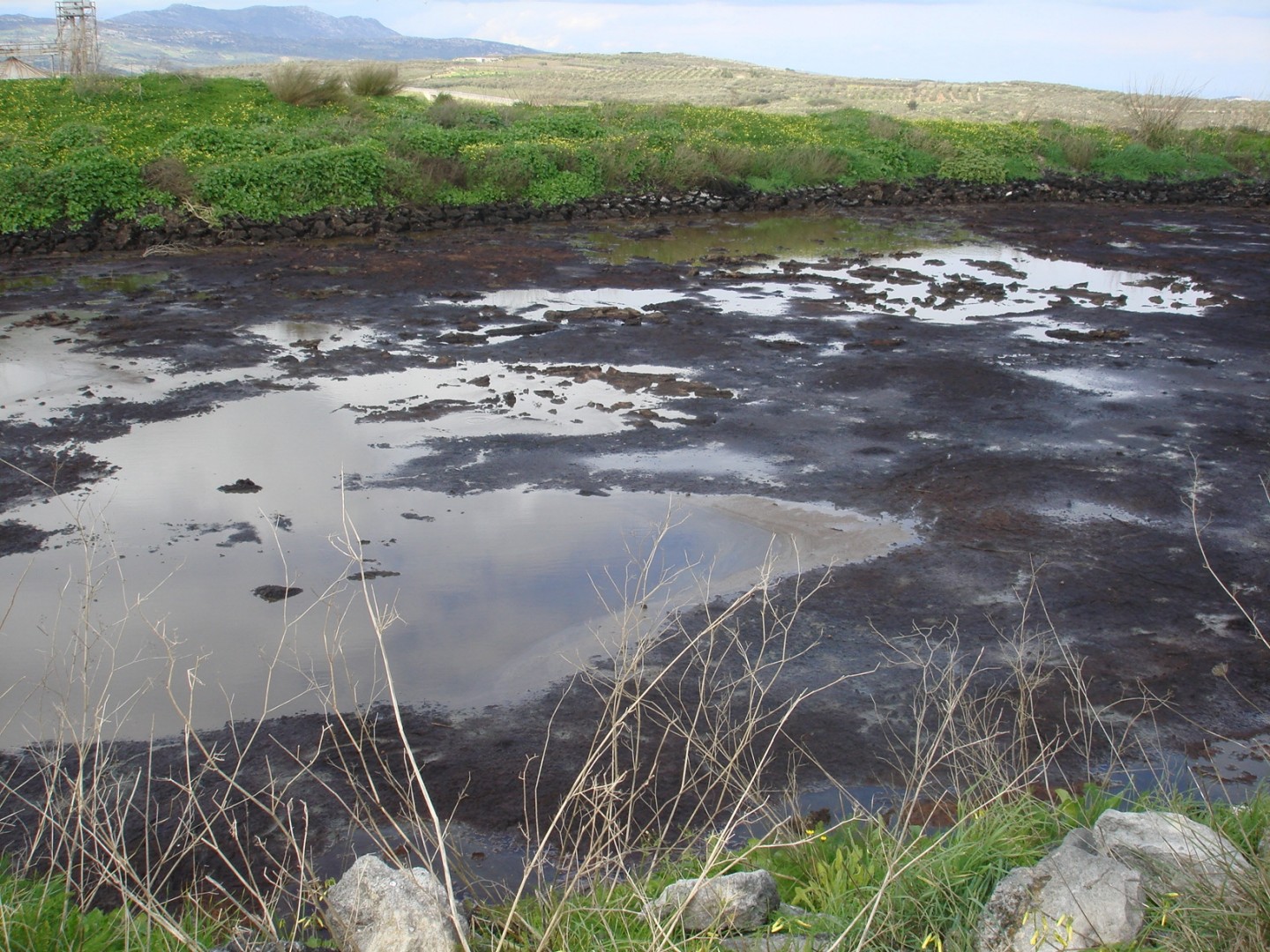
Residues from the olive oil production.

With an annual output of nearly 2.2 million tons, olive oil production in Europe is one of the most important sectors of the food industry [1]. During production in Mediterranean countries such as Spain, Greece, and Italy, large quantities of liquid and solid waste are generated within a short period of time through a two- or three-phase separation process. The discharge of liquid waste into rivers causes phytotoxic effects in the water bodies due to the high content of phenols, fatty acids, and organic substances. In some regions, the residues are collected in storage ponds, which can also lead to significant environmental impacts.

Although a cost-effective, technically feasible, and environmentally sound solution for the disposal of these residues has been sought for over 50 years, no satisfactory solution has yet been successfully implemented on a large scale in industrial practice. Together with nine European partners from research, industry, and associations, Fraunhofer IGB is developing a combined process in which the organic substances – such as polyphenols – contained in high concentrations in the residues are first extracted and utilized as natural antioxidants, and the residual biomass is subsequently fermented to produce biogas.

Anaerobic digestion of residual biomass

Reststoffe
© Fraunhofer IGB
Die Reststoffe der Olivenölproduktion sind toxisch.

Anaerobic digestion is a proven method for treating heavily polluted wastewater or sewage sludge. Various microorganisms convert organic carbon compounds into biogas in several stages under anaerobic conditions, and this biogas serves as a valuable energy source [2]. 

Wastewater and waste from olive oil production pose a particular challenge for anaerobic biological treatment, organic matter degradation, and biogas production due to their high load of organic compounds, high content of sulfur compounds and potassium, and low nitrogen content [3]. For this reason, a wide variety of solid and liquid wastes generated during olive oil production using different production techniques in Spain, Italy, and Greece were investigated. The organic residues resulting from extraction were first examined in batch experiments in a two-stage anaerobic digestion unit using double-walled 1-L bioreactors.

Bioreaktoren
© Fraunhofer IGB
In anaeroben Labor-Bioreaktoren werden die Reststoffe aus der Olivenölproduktion vergoren.

Biogas as a product

In these test series, the proportion of organic compounds in the liquid waste was reduced by 75–90 percent. The organic dry matter in the solid waste was also reduced by 78–90 percent. Biogas production from the solid waste ranged between 150 and 720 ml/g of organic dry residue (oDR) within 20–30 days. From liquid waste, 680–980 ml/g oDR of biogas was produced within 8–10 days. The methane content in biogas from solid waste ranged between 44 and 70 percent, while the methane content in biogas from liquid waste ranged between 60 and 69 percent. As the methanogenic mixed culture adapted, an increase in biogas yields was observed. Potential disruptions to biogas production, such as those caused by inhibitory substances in the waste substrates, are currently being evaluated in continuous experiments on a 1- and 100-liter scale. Anaerobic digestion experiments are currently being conducted on a pilot scale. The results at the laboratory scale already allow for an initial assessment of the energy balance: depending on the waste fraction, approximately 300–3,600 kWh per ton of solid waste can be generated, and due to the lower organic content, approximately 45–540 kWh per ton of liquid waste. At the same time, the process significantly reduces the volume of waste.

Fertilizer made from digestion residues

Fertilizer and biological pest repellent all in one: EcoBug pellets, made from the residues of cow manure fermentation enriched with cyanobacteria.

The goal of the Fertilizer Recovery work package was to produce a compact organic soil conditioner from byproducts of olive oil production. Analyses of dried digestion residues show that these byproducts are well-suited for producing organic fertilizers.

To this end, we separated the solid digestion residues from the liquid ones, then dried and pelletized them. The result was a competitive fertilizer that is stable and storable, easy to transport, and can be applied to farmland using standard spreading techniques.

The remaining liquid phase can be used for irrigation.

Outlook

In order to develop a solution for the recycling of waste materials in the olive oil industry that is both environmentally friendly and economically viable, logistical factors, the extraction of valuable materials, and the use of heat from the CHP plant must also be taken into account. This is the focus of current research and is being evaluated jointly with the consortium.

References

[1] FAO (2008) FAOSTAT database, From Food and Agriculture Organization of the United Nations: http://faostat.fao.org/ (March 15th, 2010)
[2] De Lemos Chernicharo, C. A. (2007) Anaerobic Reactors. IWA Publisher Nations: http://faostat.fao.org/ (March 15th, 2010)
[3] Chen, Y.; Cheng, J. J.; Creamer, K. S. (2008) Inhibition of anaerobic digestion process: A review, Bioresour. Technol. 99 (10): 4044-4064

Project information

Project title

En-X-Olive – Supporting SME driven olive industry to comply with EU directives


Project duration

November 2008 – October 2011


Coordination

  • Tecnologias Avanzadas Inspiralia SL


Cooperation partners

  • Associazione Produttori D'Olio di Oliva Acliterra, Italy
  • Tratamiento integral de alpechines baena, Spain
  • UGN- Umwelttechnik GmbH, Germany
  • Lachifarma S.r.l., Italy
  • Prodeval s.a.s., France
  • Fraunhofer gesellschaft zur foerderung der angewandten forschung E.v., Germany
  • Fundacion Cartif, Spain
  • Enosy Agrotikon Syn Smon Pezon, Greece
  • Asociacion Española de extractores de aceite de orujo, Spain
  • Investigación y Desarrollo Castilla y León S.A., Spain

Funding

The research project “Supporting SME-driven olive industry to comply with EU directives by converting olive oil wastewater into energy through innovative bioreactor technology, and the extraction of olive oil industry by-products: En-X-Olive” has received funding from the European Commission under the 7th Framework Programme for Research, Grant Agreement No.: 21844 42-2. The authors would like to thank all project partners for their excellent cooperation.