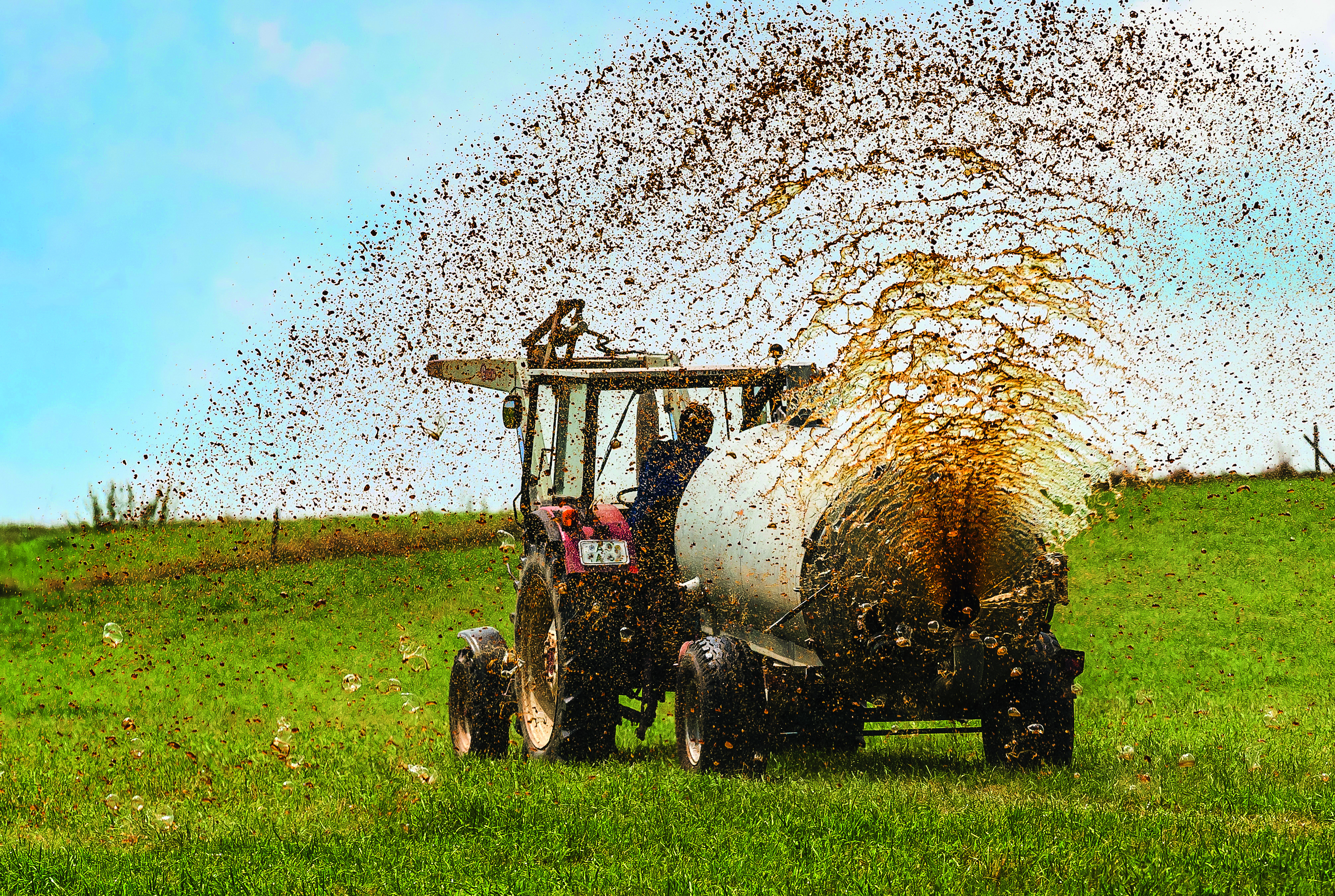
In close cooperation with PreZero, work was also carried out to determine the optimal substrates for the demonstration plant. This included analyzing the composition of the substrates and simulating their conversion. In the first phase, the following substrates were investigated: pig manure, dry chicken manure, and husks from a grain mill.
Simulations of material conversion and economic efficiency showed that operating the plant with these substrates would not be economically viable under the given conditions at the Aschersleben site. The substrate mix was therefore adjusted.
Horse manure and beet pulp from a sugar factory were added to the substrates already investigated. At the same time, it was decided that the mixture should consist of one third pig manure, another third dry chicken manure and horse manure, and one third beet pulp and cereal husks. These substrates were used to carry out shredding and mixing tests in order to find out how appropriate mixtures could be produced for further processing and to obtain a starting material for further investigations. An important factor that emerged was the mashing of the husks with water in order to achieve swelling of the husks before mixing.
The existing Excel-based stationary simulator was optimized. Up to six feed substrates were taken into account in order to consider complex mixtures. The biogas yield is calculated for each substrate. The composition of the fermentation residues is balanced depending on the defined mixed substrate. The Excel simulator was implemented in the Matlab/Simulink simulation environment in order to model the dynamic behavior of the PIGM plant more precisely with a time step of one hour.
Outlook
The simulator developed as part of the project is now available for assessing the economic viability of the process under various conditions.
Based on the results and given the significant interest in this technology for the value-added use of manure, Fraunhofer IGB continues to seek opportunities and partners for its implementation.
 Fraunhofer Institute for Interfacial Engineering and Biotechnology IGB